
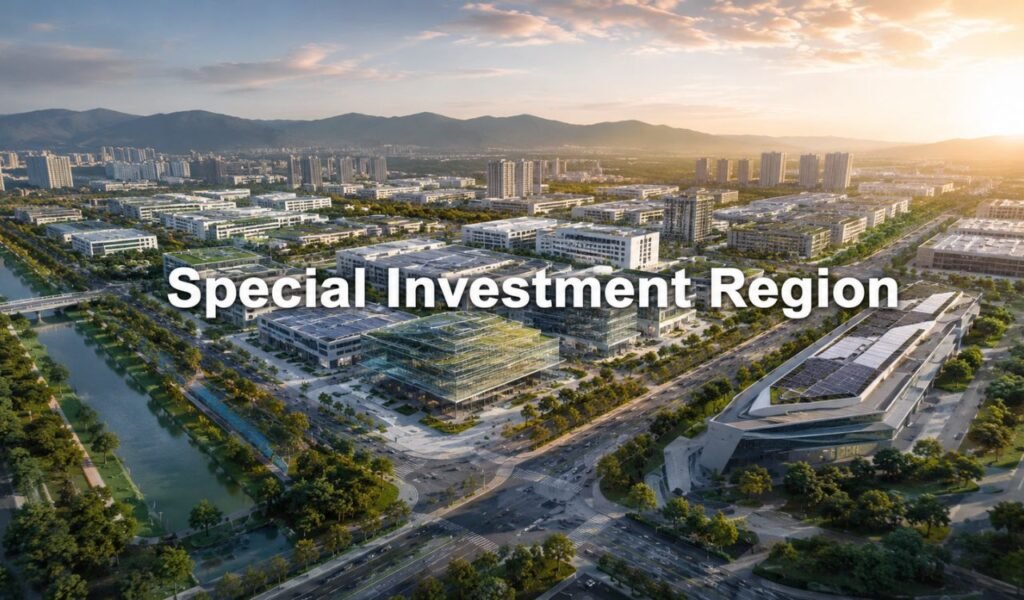
India has spent decades trying to build its own version of Shenzhen.
Most attempts became land stories instead of economic stories.
That distinction matters.
A true special investment region works only when manufacturing, logistics, capital, energy access, and policy execution move together. Otherwise, investors are simply buying expensive dirt with PowerPoint projections attached to it.
That’s why the debate around the Special investment region in India is becoming important again in 2026.
With global supply chains shifting away from China, semiconductor nationalism rising, and governments aggressively backing industrial corridors, India’s SIR model is no longer just an urban planning concept. It is now directly linked to manufacturing policy, semiconductor ambitions, export competitiveness, and even geopolitical positioning.
But markets are already pricing perfection into many “future city” narratives.
That deserves skepticism.
Live Market Snapshot
Global market sentiment in 2026 remains heavily driven by AI infrastructure spending, semiconductor capex, and expectations around rate cuts.
Institutional money is selectively rotating into:
- Semiconductor infrastructure
- Industrial automation
- EV supply chains
- Data center ecosystems
At the same time, smart-city and industrial-corridor themes are seeing speculative retail inflows.
That’s dangerous.
Whenever narratives become too clean, liquidity usually becomes the exit strategy for smarter money.
India’s SIR projects may benefit from:
- China+1 manufacturing shifts
- Lower logistics costs
- Export-linked incentives
- Domestic electronics demand
But execution risk remains significantly underpriced.
What is a Special Investment Region?
A special investment region is a large industrial and economic zone designed to attract manufacturing, infrastructure investment, exports, logistics companies, and global capital.
Unlike traditional SEZs, SIRs are usually:
- Much larger in scale
- Integrated with smart-city infrastructure
- Linked to industrial corridors
- Designed for long-term urban expansion
The goal is not just factories.
The real objective is creating entire economic ecosystems.
That includes:
- Ports
- Warehousing
- Housing
- Power infrastructure
- Financial services
- Technology parks
- Logistics networks
India’s policy vision behind SIRs was ambitious.
Execution has been uneven.
Special Investment Region UPSC Perspective
For students searching Special investment region UPSC, the topic is important under:
- Industrial policy
- Economic geography
- Urban development
- Infrastructure planning
- Manufacturing ecosystems
Key UPSC points:
- SIRs aim to accelerate industrialization
- Often connected to the Delhi-Mumbai Industrial Corridor (DMIC)
- Promote public-private participation
- Focus on export competitiveness
- Integrated urban-industrial planning model
The most discussed example remains the Dholera Special Investment Region.
Dholera Special Investment Region: India’s Most Ambitious Industrial Experiment
If one project defines India’s SIR ambitions, it is the Dholera Special Investment Region in Gujarat.
But investors should separate:
- Economic potential
- Real estate speculation
They are not the same trade.
Why Dholera Matters
Dholera sits inside the Delhi-Mumbai Industrial Corridor framework and has been positioned as:
- A future manufacturing hub
- Semiconductor destination
- Smart infrastructure city
- Export-oriented industrial ecosystem
The government narrative is compelling.
Yet markets reward execution, not brochures.
Historically, many mega-city projects globally failed because:
- Demand projections were unrealistic
- Job creation lagged
- Infrastructure monetization took decades
- Debt burdens escalated
Dholera could succeed — but timelines matter more than headlines.
Dholera Special Investment Region PDF
Many investors and UPSC aspirants search for the Dholera Special Investment Region pdf to understand:
- Master planning
- Land allocation
- Industrial zoning
- Infrastructure corridors
- Transit systems
The official planning documents outline long-term urban and industrial expansion phases extending toward 2040 and beyond.
The key takeaway from those documents is this:
Dholera is not a short-term economic story.
It is a generational infrastructure bet.
Dholera Smart City Plot Price: Opportunity or Speculative Trap?
This is where retail investors usually become emotional.
Land prices around future industrial zones often rise before industrial activity actually arrives.
That creates a dangerous disconnect.
What experienced investors watch instead:
- Manufacturing commitments
- Freight movement growth
- Energy demand
- Actual factory commissioning
- Employment creation
- Logistics utilization
Not brochure prices.
A rising Dholera Smart City plot price does not automatically mean sustainable economic activity exists underneath.
In many infrastructure booms globally:
- Early land investors made money
- Late-cycle retail participants got trapped for years
Timing matters more than the narrative.
How Many Special Investment Region in India?
India has proposed and developed multiple industrial investment regions across states.
Major Special Investment Region list includes:
- Dholera SIR – Gujarat
- Mandal-Becharaji SIR – Gujarat
- PCPIR Paradip Region – Odisha
- Petroleum and Manufacturing Zones
- Delhi-Mumbai Industrial Corridor nodes
- Integrated industrial townships
The exact number evolves as projects are approved, merged, delayed, or restructured.
But the broader trend is clear:
India is increasingly competing for global manufacturing capital.
Why Global Investors Suddenly Care About India’s Industrial Corridors
This shift is not happening in isolation.
Three global forces are colliding:
1. China+1 Supply Chain Strategy
Global corporations no longer want concentrated geopolitical risk.
That directly benefits India.
2. Semiconductor Nationalism
Every major economy now wants local chip manufacturing capacity.
That’s why semiconductor-linked industrial regions are attracting policy support.
Related reading:
- https://moneymint.co.in/best-semiconductor-stocks-with-highest-growth/
- https://moneymint.co.in/undervalued-semiconductor-stocks-2026/
- https://moneymint.co.in/most-overvalued-semiconductor-stocks-2026/
3. AI Infrastructure Demand
AI is not just software anymore.
It requires:
- Chips
- Power grids
- Cooling systems
- Industrial infrastructure
- Logistics networks
That creates indirect tailwinds for industrial corridors and smart manufacturing zones.
Explore:
- https://moneymint.co.in/ai-infrastructure-stocks-2026/
- https://moneymint.co.in/nvda-stock-price-analysis-forecast-2026/
- https://moneymint.co.in/scale-ai-stock-price-analysis/
Semiconductor Link: Why Industrial Regions Matter More Than Ever
The semiconductor conversation is reshaping industrial policy globally.
India wants to participate.
That’s why industrial ecosystems connected to electronics manufacturing are getting disproportionate policy attention.
Comparison Table
| Feature | Special Investment Region (SIR) | Special Economic Zone (SEZ) | Industrial Park |
|---|---|---|---|
| Purpose | Large-scale industrial and economic development. | Boost exports through tax incentives. | Provide space for industrial operations. |
| Size | Very large region covering hundreds of square kilometers. | Moderate-sized designated zone. | Usually smaller and industry-specific. |
| Infrastructure | Integrated townships, roads, utilities, and logistics. | Focused on export-related infrastructure. | Basic industrial facilities and services. |
| Investment Focus | Domestic and foreign investments across multiple sectors. | Export-oriented businesses and industries. | Manufacturing and industrial units. |
| Government Support | Special planning authority and policy support. | Tax benefits and customs exemptions. | State-level incentives may apply. |
| Residential Development | Includes residential, commercial, and social infrastructure. | Limited residential facilities. | Generally not included. |
| Economic Impact | Creates jobs, attracts investments, and drives regional growth. | Enhances exports and foreign exchange earnings. | Supports local industrial development. |
To display real-time stock prices, use this HTML widget
MOSCHIP
MICEL
SPEL
Historical Performance Table
| Year | Major Development | Investment Growth | Employment Impact | Infrastructure Progress |
|---|---|---|---|---|
| 2009 | Initial SIR policy framework introduced. | Low | Limited job creation. | Planning stage. |
| 2012 | Land acquisition and development activities accelerated. | Moderate | Increase in construction jobs. | Road and utility projects started. |
| 2015 | Major industrial investments announced. | High | Thousands of direct and indirect jobs created. | Industrial infrastructure expanded. |
| 2018 | Foreign and domestic investments increased. | Very High | Significant employment growth. | Logistics and transport networks improved. |
| 2021 | Smart infrastructure and sustainability initiatives launched. | Strong Recovery | New opportunities in manufacturing and services. | Digital and green infrastructure development. |
| 2024 | Expansion of industrial clusters and integrated townships. | Very Strong | Large-scale employment generation. | Advanced transport and utility systems operational. |
Calculator
Use this return calculator to evaluate:
Most retail investors overestimate returns and underestimate volatility.
That combination destroys capital during drawdowns.
What Could Go Wrong?
Every infrastructure cycle looks obvious in hindsight.
Before that, it usually looks messy, delayed, and politically complicated.
1. Semiconductor Cycles
Chip demand is cyclical.
If global semiconductor demand slows after the AI capex boom, many industrial expansion assumptions could weaken.
Related:
- https://moneymint.co.in/7-semiconductor-stocks-under-50/
- https://moneymint.co.in/software-stocks-2026-ai-winners-losers/
2. Overvaluation
Narratives can inflate asset prices far ahead of economic reality.
This already happened in:
- EV startups
- Green energy
- Metaverse plays
- SPAC cycles
Read:
- https://moneymint.co.in/most-overvalued-semiconductor-stocks-2026/
- https://moneymint.co.in/muln-stock-analysis/
3. Liquidity Traps
Many small-cap industrial and semiconductor stocks have low institutional participation.
That creates:
- Thin liquidity
- Sharp drawdowns
- Retail panic selling
4. Retail Speculation
Whenever “future city” narratives dominate YouTube and Telegram groups, caution becomes necessary.
Professional investors usually scale exposure when retail enthusiasm becomes euphoric.
5. Global Slowdown
A global recession or export slowdown would directly impact:
- Manufacturing demand
- Industrial capex
- Logistics activity
- Semiconductor consumption
Macro Context Investors Cannot Ignore
Interest Rates
Lower global rates support infrastructure and industrial spending.
But sticky inflation could delay easing cycles.
That matters because mega-industrial projects are capital intensive.
AI Boom
AI infrastructure spending is currently acting like the railroads of the digital era.
The beneficiaries include:
- Data centers
- Semiconductor manufacturing
- Power infrastructure
- Industrial automation
Related:
- https://moneymint.co.in/palantir-stock-price-today-live/
- https://moneymint.co.in/anthropic-stock-ipo-status-2026/
EV Demand
EV growth creates second-order demand for:
- Semiconductors
- Battery ecosystems
- Industrial logistics
- Smart infrastructure
Explore:
- https://moneymint.co.in/best-ev-stocks-under-20/
- https://moneymint.co.in/tsla-stock-analysis-buy-sell-hold-2026/
- https://moneymint.co.in/rivian-stock-forecast-2026/
Global Chip Shortage
The world learned a painful lesson during the semiconductor shortages:
industrial sovereignty matters.
That realization is reshaping policy worldwide.
3 Scenario Outlook (2026–2030)
| Scenario | Investment Growth (2026–2030) | Industrial Development | Employment Generation | Infrastructure Expansion | Overall Outlook |
|---|---|---|---|---|---|
| Bullish Scenario | Rapid increase in domestic and foreign investments. | Large-scale industrial clusters and manufacturing hubs emerge. | Strong job creation across multiple sectors. | World-class transportation, logistics, and smart-city projects completed. | SIR becomes a leading economic growth engine. |
| Base Scenario | Steady investment growth supported by government initiatives. | Gradual expansion of industrial and commercial activities. | Consistent increase in employment opportunities. | Key infrastructure projects completed on schedule. | Sustainable and balanced long-term development. |
| Bearish Scenario | Slower investment inflows due to economic uncertainties. | Industrial expansion progresses at a limited pace. | Moderate job creation with slower workforce absorption. | Infrastructure projects face delays or funding constraints. | Growth continues but below initial expectations. |
Portfolio Strategy for Industrial & Semiconductor Exposure
A balanced portfolio matters more than finding the next “10x” story.
Example Allocation
- Large-cap semis: 50%
- Mid-cap industrial plays: 30%
- High-risk speculative small caps: 20%
The goal is survival first.
Aggressive concentration works only during ideal cycles.
Most investors discover risk too late.
Related reads:
- https://moneymint.co.in/stocks-that-could-10x-by-2030/
- https://moneymint.co.in/stock-market-analysis-long-term-investors/
- https://moneymint.co.in/how-to-choose-your-first-stocks/
- https://moneymint.co.in/difference-between-trading-and-investing/
- https://moneymint.co.in/investing-in-stock-market-beginners-guide/
Featured Snippets
Are Special Investment Regions good investments in 2026?
They can be attractive long-term opportunities if manufacturing activity genuinely develops. However, investors should avoid treating land speculation as industrial growth. Execution, logistics demand, and corporate participation matter more than marketing narratives.
Which Special Investment Region has the highest growth potential?
Dholera Special Investment Region currently receives the most attention due to government backing, smart-city planning, and semiconductor ambitions. However, long timelines and policy execution remain critical risks that investors should monitor closely.
How many Special Investment Regions exist in India?
India has multiple industrial investment regions across different states, including Dholera SIR and other corridor-linked industrial zones. The total number may change over time as new projects are launched, expanded, merged, or restructured.
Why are investors watching semiconductor-linked regions?
Semiconductor manufacturing requires a complete ecosystem that includes reliable power, water supply, logistics networks, skilled labor, transportation infrastructure, and supportive government policies. Regions that can provide these advantages may become strategically important economic hubs in the future.
Is Dholera Smart City mainly a real estate story?
At present, much of the interest surrounding Dholera is driven by its future development potential rather than existing economic activity. Its long-term success will depend on attracting manufacturing industries, generating employment, and creating sustainable economic growth rather than relying solely on real estate demand.
Additional Market Reading
For broader market context and thematic investing:
- https://moneymint.co.in/tech-stocks-2026/
- https://moneymint.co.in/why-are-stocks-down-today/
- https://moneymint.co.in/what-is-sp-stock-sp-500-explained/
- https://moneymint.co.in/hood-stock-earnings-2026/
- https://moneymint.co.in/nbis-stock-analysis-2026-price-target-buy-or-sell/
- https://moneymint.co.in/asts-stock-analysis-2026-buy-or-sell/
- https://moneymint.co.in/vrt-stock-analysis-2026-price-target-buy-or-wait/
- https://moneymint.co.in/vmware-stock-price/
- https://moneymint.co.in/m-stock/
- https://moneymint.co.in/suzlon-energy-share-price-analysis/
- https://moneymint.co.in/idea-share-price/
- https://moneymint.co.in/nflx-stock-forecast-2026/
- https://moneymint.co.in/is-gold-bullion-a-good-investment-in-2026/
- https://moneymint.co.in/gold-vs-silver/
- https://moneymint.co.in/real-estate-investment-advice/
FAQ
1. What is a Special Investment Region?
Answer: A Special Investment Region is a large industrial and infrastructure zone designed to attract manufacturing, exports, logistics, and private investment through integrated development planning.
2. What is Dholera Special Investment Region?
Answer: Dholera SIR is a planned smart industrial city in Gujarat under the Delhi-Mumbai Industrial Corridor initiative focused on manufacturing, infrastructure, and technology-driven urban development.
3. Why is Dholera important for India?
Answer: Dholera represents India’s attempt to build globally competitive industrial infrastructure capable of attracting semiconductor, logistics, and export-oriented industries.
4. Is Dholera a good investment?
Answer: Potentially, but only for patient investors who understand infrastructure cycles. Speculative short-term buying based purely on marketing hype can become risky.
5. What are the risks in Special Investment Regions?
Answer: Key risks include policy delays, infrastructure execution challenges, speculative land pricing, liquidity traps, and global manufacturing slowdowns.
6. How do semiconductor trends affect SIR projects?
Answer: Semiconductor ecosystems require advanced infrastructure, logistics, and reliable power, making industrial regions strategically important for future manufacturing growth.
7. Are SIR projects relevant for UPSC preparation?
Answer: Yes. They are important topics under industrial policy, urban planning, infrastructure development, and economic geography.
Conclusion
India’s Special Investment Region strategy is not meaningless.
But it is also not guaranteed.
The smartest investors will avoid two extremes:
- Blind optimism
- Cynical dismissal
Industrial infrastructure takes time.
Sometimes decades.
The real winners are usually investors who:
- Focus on execution instead of headlines
- Watch cash flows instead of narratives
- Respect cycles
- Manage risk aggressively
Dholera and other industrial corridors could become foundational pieces of India’s manufacturing future.
Or they could become partially completed policy experiments stretched across election cycles and speculative capital.
Right now, the truth is somewhere in between.
That’s usually where the best investing opportunities — and the biggest traps — both exist.